
Two wall units in the same house can need different filter reminders. Start with the indoor model number on each unit or on your installer’s handover sheet. Keep a note with the manual, the last filter cleaning date and where the cooling water drains. Those details are handy when one room starts feeling stuffy while the other still cools well.
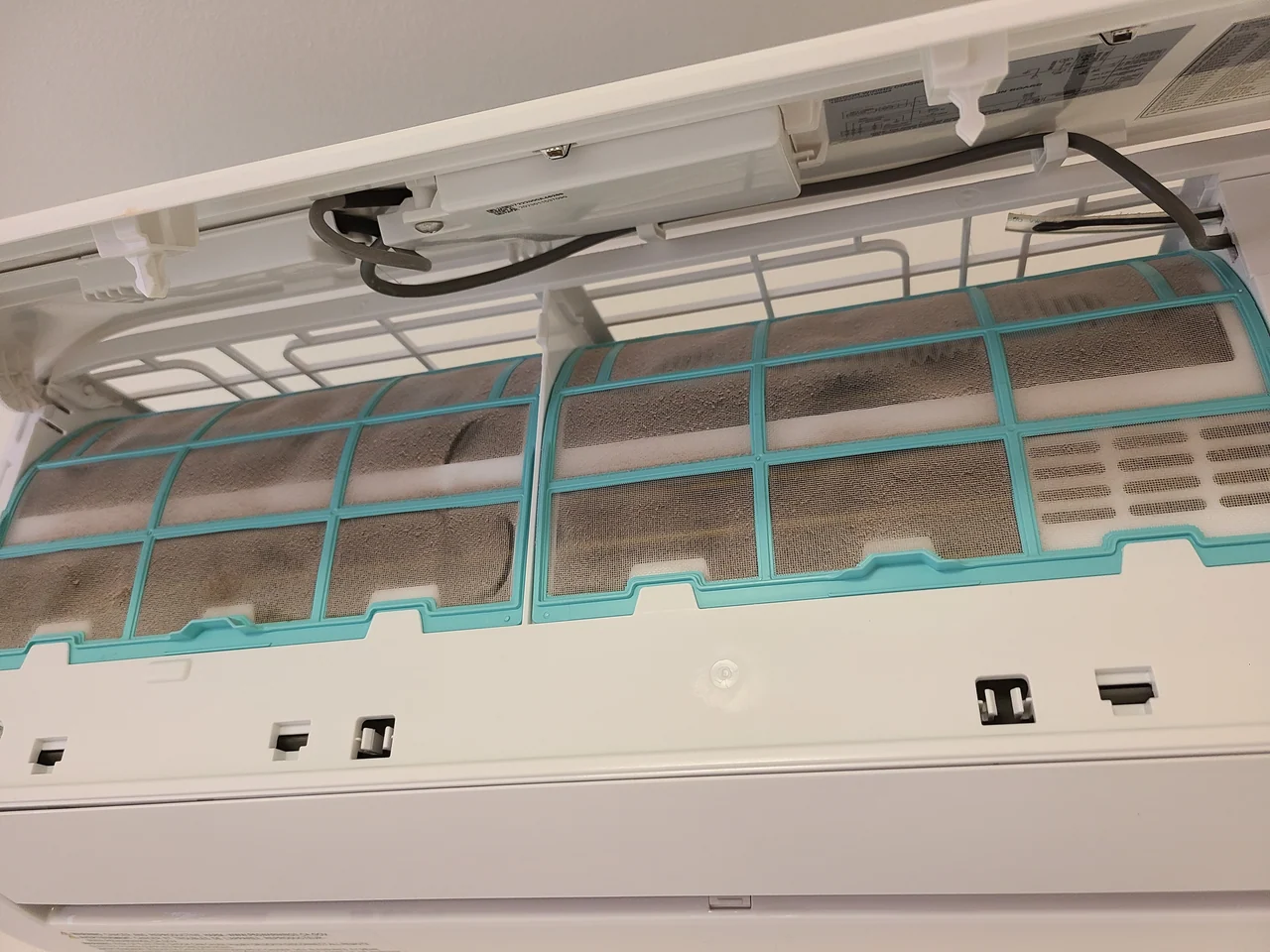
Give each filter its own schedule
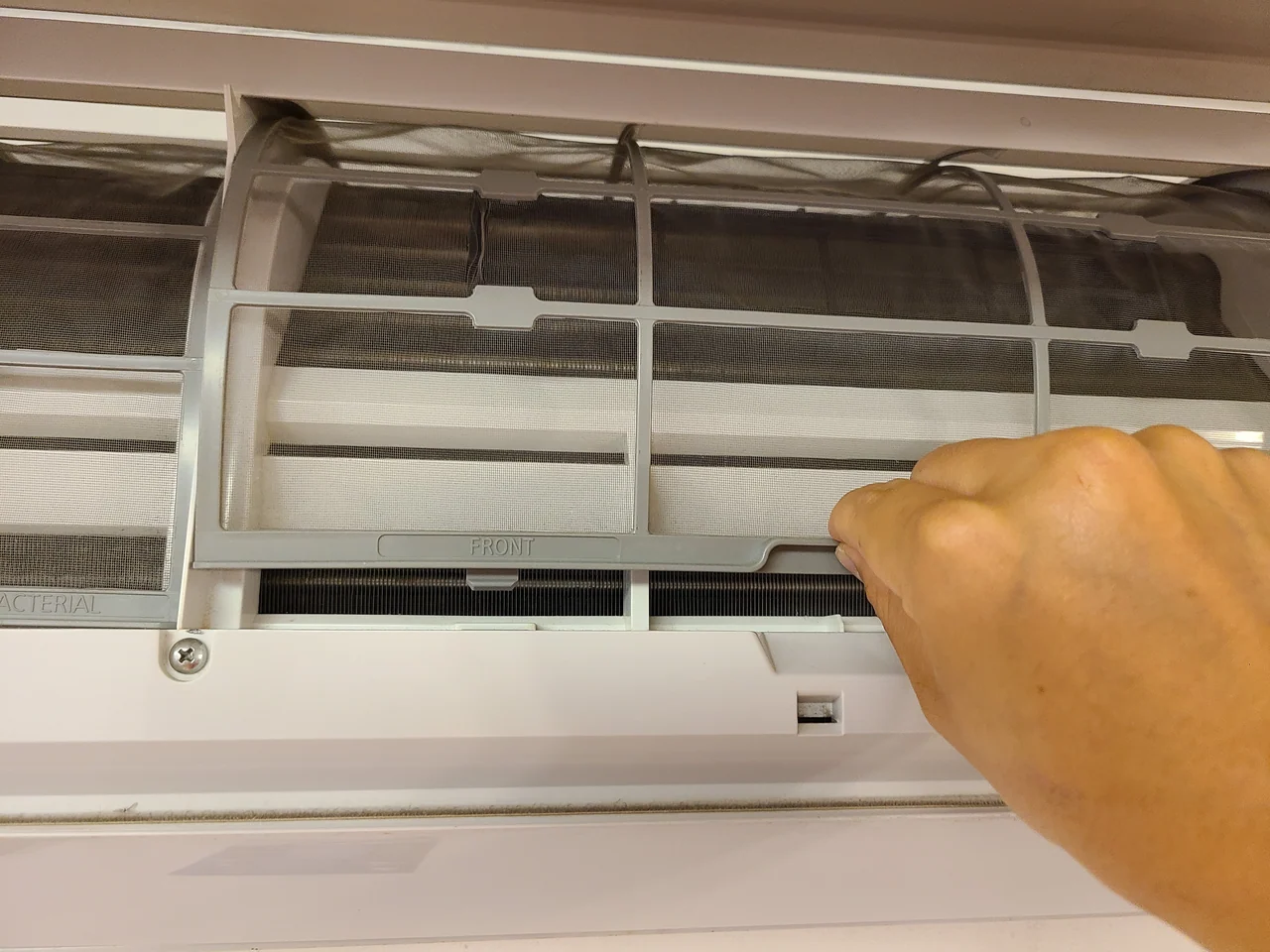
The GREE Livo GEN4 owner’s manual, page 18, calls for cleaning the main filter every one to three months, more often in dusty surroundings. The Daikin Atmosphera manual, pages 41–43, recommends cleaning the main mesh about every two weeks for indoor models FTXM09/12/18/24WVJU9. Clean its titanium apatite deodorizing insert every six months and replace it every three years. In a home with shedding pets, inspect the screen near their favorite chair sooner and note what you find.
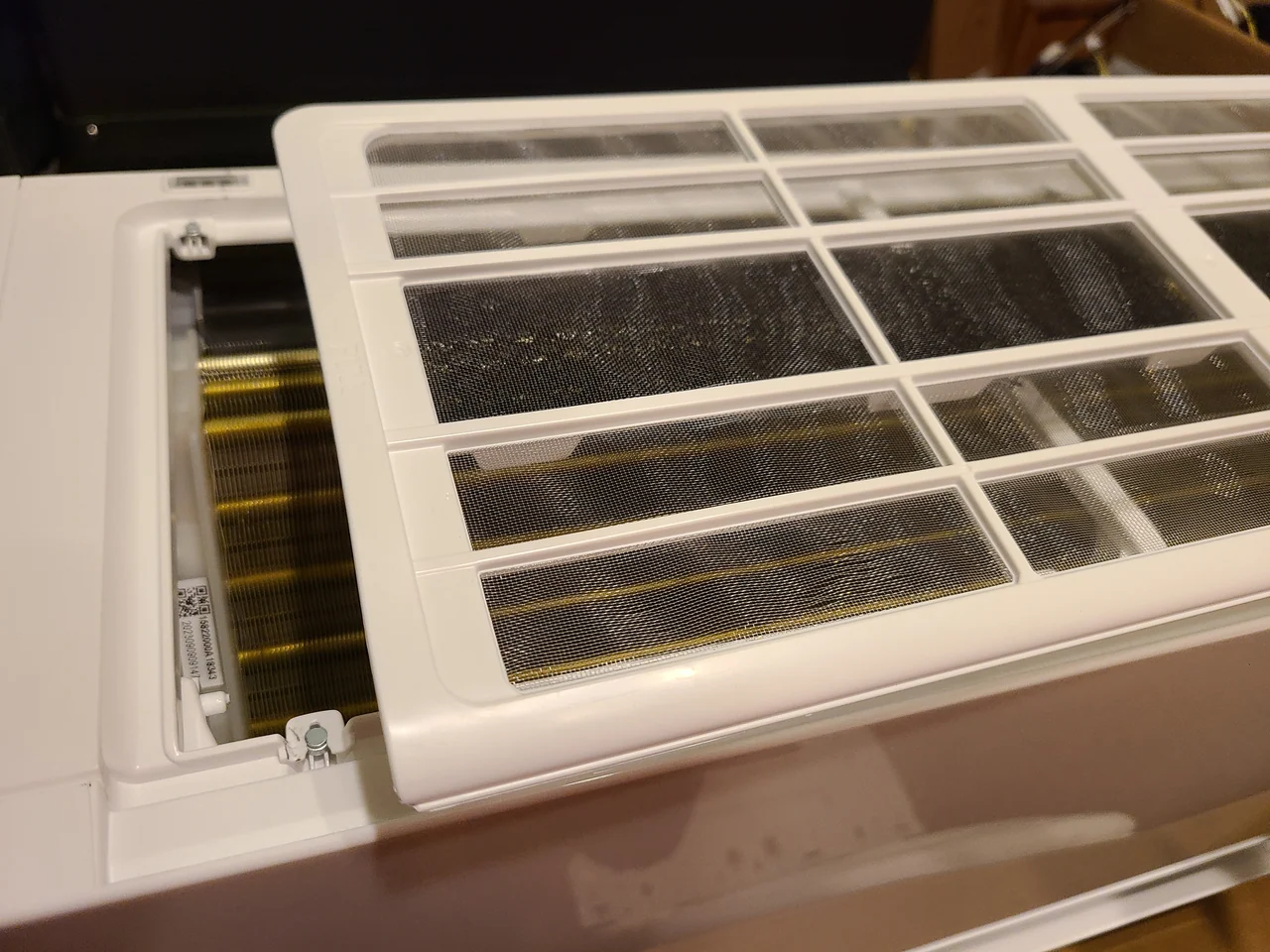
Follow the model’s shutdown and power-disconnection directions before opening the cover. Photograph how any small insert clips onto the main mesh. Some screens slide along rails. The GREE unit uses spring fasteners. Follow the drawing if a part resists. Use the cleaning method for that particular filter, let a washed screen dry as directed and seat it securely before restarting. Keep fingers clear of the metal fins behind the filter.
Walk from the indoor head to the drain outlet
With the cover closed, check that curtains and furniture leave the intake and outlet clear. In cooling mode on a humid day, look at the condensate drain outlet the installer identified. The amount of water varies with humidity and how much the unit has run. If water drips from the indoor cabinet or streaks the wall below it, stop the unit and contact the installer. Tell them which head leaked and whether the drain uses a pump.
Outside, clear loose leaves, bags and snow from the space around the unit. Give the fan discharge and coil intake the clearance shown for your outdoor model. Look through the grille from outside. In heating mode, frost can form on the outdoor coil and clear during defrost. If ice stays on the coil through those cycles, or debris is matted against the fins, leave the cabinet closed and call for service. The heat pump owner’s guide hosted by DOE shows where debris and snow can obstruct airflow.
When cleaning the screen doesn’t help
If airflow stays weak with a clean filter, check the selected mode and fan setting, then record what happens. Does the fan sound normal? Does the problem affect one head or every room? Pass those observations to the technician. If you notice a burning smell, shut the unit down, leave it off and call for service.
ENERGY STAR recommends annual preseason contractor checkups. Ask the company which season makes sense for the way you use the equipment. A service visit can cover indoor and outdoor coils, blower operation, the condensate drain and any pump. Ask what the technician found and what was cleaned. Keep that record alongside the model numbers so a recurring drainage or airflow problem is easy to trace.
| Indoor unit and filter | Manufacturer’s interval |
|---|---|
| GREE Livo GEN4 main filter | Clean every 1–3 months, sooner in dust. |
| Daikin Atmosphera WVJU9 main air filter | Clean every 2 weeks. |
| Atmosphera WVJU9 deodorizing filter | Clean every 6 months. Replace every 3 years. |